Brisbane & South East Queensland
Data cabling electrician or registered cabler: which do you need?
Typing "data cabling electrician" into Google is a fair way to end up more confused, not less — because in Australian law there's no such combined trade. An electrician holds a state electrical licence. Someone running data cabling holds a separate federal registration. They can be the same person, but nothing about a sparky's licence tells you which one you've actually got.
Work carried out by an ACMA registered cabler no. 42489 Class Open Installed to AS/CA S009:2020
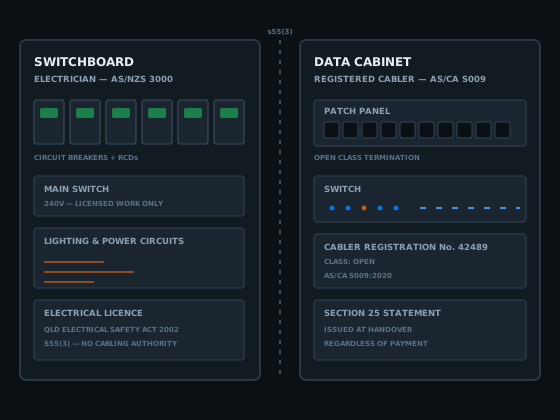
Most of the confusion here isn't about wiring — it's about which rulebook governs the job. Electrical work in Queensland sits under state law. Data cabling sits under a separate federal scheme, and the two barely touch. A data cabling electrician search usually starts with a builder or an agent saying "the sparky can do that too," and that sentence is sometimes true and sometimes very wrong.
This page works through the actual distinction: who's allowed to do what, what to ask before a renovation, new build or office fitout starts, and what happens if the wrong trade signs off on it. For the deeper detail on registration classes and how to verify one, see the full guide to a registered cabler in Brisbane.
What "data cabling electrician" actually means
Search "data cabling electrician" and you'll get exactly what the term implies: pages assuming the two jobs are one. They're not, and the gap matters more than most renovation or fitout plans account for. An electrician's trade is regulated by state electrical safety law — in Queensland, the Electrical Safety Act 2002. Data cabling — the fixed cable, outlets and patch panels behind a network — is regulated separately, by a federal instrument that has nothing to do with electrical licensing at all.
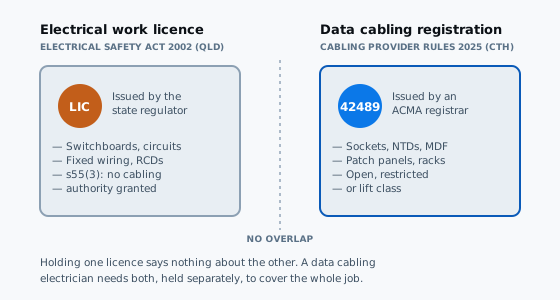
So when someone searches for a data cabling electrician, what they usually want is one of two things: a tradesperson who can safely run cable near an existing switchboard without creating a hazard, or a tradesperson who's legally allowed to terminate that cable onto a network. The first is a competence question. The second is a registration question, and it's the one that actually decides whether the work is lawful.
The honest answer is that a data cabling electrician, as a single licensed job title, doesn't exist in Australia. What exists is an electrician, licensed by the state, and a registered cabler, registered by the Commonwealth — who may or may not be the same person standing in your roof cavity.
The subsection that decides it
The law in one line: section 55(3)
Section 55(3) of the Electrical Safety Act 2002 (Qld) says an electrical work licence is not required for the purpose of installing or repairing telecommunications cabling. That single subsection is the reason "fully licensed electrician" tells you nothing about whether someone may lawfully run your data cabling — the state licence simply isn't the relevant qualification for the job.
The federal side is section 21 of the Telecommunications (Cabling Provider) Rules 2025, which commenced 31 March 2025. It requires cabling that connects to a telecommunications network to be performed by a registered cabling provider, or by someone directly supervised at all times by one — regardless of what other trade licence that person holds.
Put the two together and the picture is simple, even if the marketing around it isn't. Queensland has deliberately left cabling out of the electrical licensing system, and the federal government has built a separate registration for it instead. A data cabling electrician search sits exactly on that gap between the two.
What your electrician can — and can't — do on a cabling job
An electrician who also holds a cabling registration can lawfully do everything on this page — run the switchboard, then terminate the data outlets, all under their own name. That's a normal, legitimate combination, and plenty of Brisbane electricians hold it. The problem is assuming it rather than asking.
Without a cabling registration, an electrician's licence authorises exactly what it says: electrical work under the Electrical Safety Act. It says nothing about pulling Cat6 to a wall plate, terminating it, or testing the link. A data cabling electrician who hasn't got the federal registration is, for that part of the job, doing unregistered cabling work — regardless of how good their electrical work is.
There's a narrower lawful path too: an unregistered person can work on cabling if they're directly supervised at all times by someone who's registered and accepts full responsibility for the work. An electrician standing in for that role needs to actually be that supervisor, present and responsible, not just present on site doing something else. That's the only way a data cabling electrician without their own registration can lawfully touch the cable at all.
What a registered cabler covers that an electrical licence doesn't
A registered cabler — the person most data cabling electrician searches are actually looking for — gets their authority from the Telecommunications (Cabling Provider) Rules 2025, in one of three classes: open, restricted or lift. Open covers cabling terminating at a socket, a network termination device or a main distribution frame. Restricted stops short of the MDF and the patch panel, which rules it out for most commercial structured cabling and office fitouts.
On top of the class, six specialised categories exist — aerial, broadband, coaxial, optical fibre, structured and underground — each requiring completed training units and notification to the registrar before the person may lawfully perform that kind of work. An open registration covers all six; a restricted one covers only aerial, broadband and underground.
None of that has an electrical equivalent, because it isn't electrical regulation. A data cabling electrician who's genuinely registered will be able to name their class and which categories have been notified, on the spot, without checking. If they can't answer, that's the tell.
Renovating an existing home: who to call before the walls open
Most Brisbane renovations touch both trades at once — power gets moved for a new kitchen layout, and data points get added for the study or the TV wall while the plasterboard is off anyway. It's tempting to fold both into one trade for convenience, and sometimes that's fine. It only becomes a problem when convenience quietly becomes the only reason.

Ask the specific question before cable goes into the cavity: is the person doing the data run actually a registered cabler, separate from being your electrician? A roof cavity or subfloor makes most homes cheap to cable without wall damage, and that access window is exactly when it's easiest to skip the question and let whoever's already up there do it.
If the answer is no, that's not necessarily bad news — it just means the data cabling electrician conversation needs a second trade in it. Scheduling two trades around the same open wall is routine on a renovation, and it costs less than reopening a wall later because the first pass wasn't lawful or wasn't tested.
New builds: get it settled before the frame stage
New build contracts are where this gets missed most often, because the electrical package is usually locked in early and data cabling gets treated as an afterthought inside it. By the time anyone asks who's actually running the Cat6, the frame is up and the easy access window has closed.
Builders default to one trade for scheduling reasons, not legal ones — fewer people on site, fewer callouts, one invoice. That's a reasonable business instinct, and it doesn't answer the data cabling electrician question on its own. Ask the builder directly, in writing, before signing off the electrical package: who's registered to run the data cabling, and under what class.
It's a five minute conversation at contract stage and a much longer one after the plaster's up. A new build is also the cheapest point in the life of the house to add extra data points — a ceiling run for wireless coverage, a second outlet in the study, a point in the garage — because the cavities are open for everyone anyway.
Office fitouts and the default assumption that one trade covers it
Commercial fitouts run on tight programs, and the electrical contractor is usually already booked for power, lighting and life safety circuits. Folding data cabling into the same trade looks efficient on a program chart. It works fine when the electrician quoting the fitout is also open class registered. It fails quietly when they're not, because the cabling still gets pulled — just without registration behind it.
This is where data cabling services usually mean more than a few outlets — patch panels, a comms cabinet, PoE runs for access points and cameras, all landing at a rack that only open class registration authorises. Restricted class, which some electrician-cablers hold, stops at the socket and can't touch that termination.
If your builder or project manager assumes one trade covers it, put the data cabling electrician question directly to whoever's quoting: what class, what's notified, and will the compliance statement be issued at handover. If a subcontracted data cabling contractor ends up doing the work anyway, that should be visible in the quote, not discovered at invoice time.
What goes wrong when the wrong trade signs off
Nothing goes wrong immediately, which is exactly why this gets ignored. A link light comes on, the printer connects, everyone moves on. The problems show up later: no compliance statement when an insurer or a body corporate asks for one, no test results when a link starts dropping to 100 megabit instead of a gigabit, and no clear record of who's actually responsible for the cable behind the wall. None of that changes because a data cabling electrician was the one holding the cable instead of a dedicated cabler.
Breaching the cabling rules carries a penalty of up to 100 penalty units under section 421(4) of the Telecommunications Act 1997 — a real number, rarely enforced against homeowners directly, but it's the seriousness the law attaches to it. The more common cost is practical: a data cabling electrician who wasn't actually registered has no obligation to hand you a written statement, because that statement only exists under the registration scheme they never entered.
There's a cost angle too. Fault finding and small cabling jobs are usually billed hourly, with published Brisbane rates for comparable work sitting around $185 an hour for standard hours. Redoing cabling properly after an unregistered first attempt isn't a cheap fix — it's two trades' worth of labour for what should have been one.
How to tell who's actually registered, in under a minute
You don't need to become an expert in the Cabling Provider Rules to check this — you need three questions answered before anyone starts. Ask for a registration number, ask which class it is, and ask whether the compliance statement is included at handover. A genuinely registered person answers all three without hesitation.
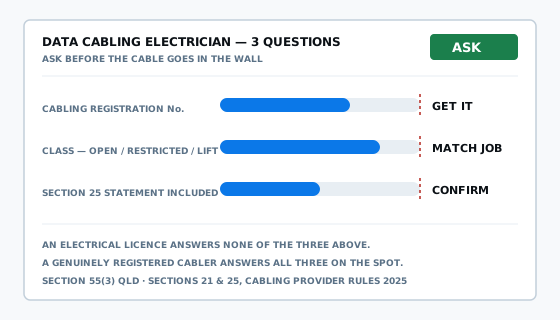
The deeper detail — the four accredited registrars, how to look a number up, and what each class actually authorises — is covered properly on the registered cabler Brisbane page, because it applies to every cabling job, not just the ones where an electrician is involved. Read that if the answer to any of the three questions above comes back vague.
One thing worth remembering: registration is issued to an individual, never to a company. "We're a licensed electrical company" is a true and separate claim from "the person on your job today is a registered cabler." Both can be true at once. Only one of them answers the data cabling electrician question that actually matters.
Data cabling electrician, registered cabler, or both — deciding for your job
For a small, simple home job — one or two extra outlets, an existing roof cavity, no patch panel involved — a data cabling electrician who genuinely holds at least restricted registration is often the simplest option, because it's one trade, one visit, one invoice.
For anything landing at a comms cabinet or patch panel — most commercial fitouts, larger homes with a proper rack, anything carrying PoE cameras or access points — open class registration is the requirement, and that narrows the field. Ask directly rather than assuming the electrician on the job already has it.
Either way, the decision isn't electrician versus cabler as rival trades. It's checking which registration the actual person in front of you holds, for the actual termination point your job needs. Get that answer before the cable goes in, and the rest of the job — testing, labelling, the compliance statement — follows the same rules regardless of which van it arrived in.
Data cabling electrician questions people ask
Is a data cabling electrician a recognised trade in Australia?
No. There's no combined licence or registration called a data cabling electrician — the two trades are regulated separately. An electrician holds a state electrical work licence. Someone running data cabling holds a federal cabling registration under the Telecommunications (Cabling Provider) Rules 2025. A person can hold both, but neither qualification substitutes for the other.
Can my electrician legally run the data cabling during a renovation?
Only if they also hold a cabling registration, or work directly supervised by someone who does. An electrical work licence on its own doesn't authorise cabling that connects to a telecommunications network, so a data cabling electrician quote should confirm the registration up front, not assume it.
Why does my builder assume the electrician will run the data points on a new build?
Because electricians are already booked for power and it looks efficient to add data to the same line item. It's a scheduling habit, not a legal fact, and it doesn't answer the data cabling electrician question on its own. Confirm separately that the person running the data holds the registration for it.
What happens if an unregistered person installs my data cabling?
The work is unlawful under section 21 of the Cabling Provider Rules, whoever did it. Practically, you get no compliance statement, no test results, and no evidence the cabling meets AS/CA S009:2020. That becomes a real problem at resale, at insurance claim time, or the first time a fault needs tracing.
Does an electrical licence cover data cabling work in Queensland?
No, and the reverse is also true. Section 55(3) of the Electrical Safety Act 2002 (Qld) says an electrical work licence isn't required to install or repair telecommunications cabling — which means holding one doesn't authorise it either. Queensland leaves cabling entirely to the federal registration scheme.
Should I get a data cabling electrician quote or hire a separate cabler for an office fitout?
Ask the electrician quoting the fitout whether they're genuinely a data cabling electrician with an open class registration, not just a licensed sparky. If yes, one trade can cover both scopes. If no, budget for a separate registered cabler — a fitout landing at a patch panel needs open class, which a restricted registration can't touch.
Can an electrician and a registered cabler work on the same job without conflict?
Yes, and on most fitouts they do — the electrician runs power and lighting circuits, the cabler runs data, and the two trades coordinate around each other's rough-in. The only rule that matters is that whoever terminates the data cabling is registered to do that specific work, separately from whatever the electrician is licensed for.
What should I be handed at the end of a data cabling job, electrician or not?
A written compliance statement under section 25 of the Cabling Provider Rules, supplied whether or not you've paid yet. It has to name the registered provider, identify the work, and state it complies with the Wiring Rules. If nobody mentions this at handover, ask for it — it isn't optional paperwork.
Is it more expensive to hire a separate cabler instead of asking the electrician to do everything?
Not usually, once you compare properly. A data cabling electrician who isn't actually registered for cabling will either subcontract the work anyway, adding a margin, or do it unlawfully with no compliance statement. A registered cabler quoting the cabling directly is often the same price with the paperwork included.
Who do I call first when I'm renovating and need both power and data moved?
Either trade can start the conversation, but get both scoped before the walls open. Tell the electrician what circuits move, tell the cabler where the data points land, and confirm which one of them, if either, is actually a registered cabler before any cable goes into the cavity.
Not sure if you need an electrician or a cabler?
Tell me what the job is — renovation, new build or fitout — and whether an electrician is already booked on it. I'll tell you straight whether you need a separate registered cabler or whether your data cabling electrician question is already answered by the trade you've got.
Or call 07 3521 8082. Voicemail means I'm up a ceiling; leave a message and I'll call back.
Work carried out by an ACMA registered cabler no. 42489 Class Open